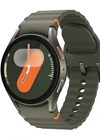
Restful sleep is crucial for health but conditions like obstructive sleep apnoea (OSA) can significantly disrupt it, leading to fatigue, cardiovascular issues, and other serious health problems. Polysomnography (PSG) remains the gold standard for OSA diagnosis [1], however it is...
1 September 2014
| Johan Fagan (Prof)
|
ENTA - ENT
I have been asked to share some of the initiatives I have been involved with to address ENT-related challenges in Africa and the developing world. Developing countries constitute the majority of the world’s landmass (Figure 1), are home to >50%...
In a follow-up to the interview with Anne Schilder back in 2016*, Jameel Muzaffar speaks to Anne and to James O’Hara about the current research landscape in ENT in the UK. *Banerjee A. In conversation with Professor Anne Schilder. ENT...
A groundbreaking VR platform is transforming NHS training, offering immersive, cost-free simulation experiences to boost skills across multiple clinical fields. ENT is a specialty that demands precision, rapid decision-making and familiarity with complex anatomy, especially in emergency contexts such as...
Psychological approaches to tinnitus There is now widespread agreement that an individual’s interpretation of tinnitus can determine how distressing they find it. If tinnitus is regarded as non-threatening then habituation normally follows. If, however, tinnitus is interpreted as threatening, habituation...
Introduction Early identification of hearing loss in infants followed by prompt intervention is well established as the key to maximising the development of speech, language and psychosocial skills. Many countries have already adopted early hearing detection and intervention (EDHI) programs,...
When multi-channel cochlear implants (CIs) were first introduced in the 1980s, their use was restricted to people who derived no benefit from conventional amplification. Over the past three decades, however, the criteria for CIs has been relaxed considerably, and it...
From an international driver to the client-centred care model; in this article Anthony Hogan explores outcome measures for individual goal setting and measuring those outcomes. Introduction When people present for hearing help, they are typically looking for solutions to the...
Big Data? Biosensors, smart hearing aids and smartphones? The EVOTION Project has it all and more! What will this project tell us about the future of hearing management? Doris-Eva Bamiou, Giorgos Dritsakis and Louisa Murdin, members of the EVOTION team,...
There are many good reasons to start using multifrequency tympanometry as opposed to a traditional, single 226Hz probe tone. Here, Leigh Martin of Interacoustics discusses the uses and benefits. Tympanometry is a core test in the audiologist’s test battery. In...
Theory of mind relates to a person’s ability to understand the perspectives of others, to be aware that they may differ from one’s own perspectives and the ability to use this knowledge to navigate social situations. Dr Helen Chilton explores...
Clinical assessment of the dizzy or imbalanced patient is all about the patient’s history. History, history, history. But what about puzzling cases when we feel we need more information? Sally Rosengren gives us a rundown of the vestibular tests which...