
You searched for "smartphone"
Winners announced for 2024 Hearing Technology Innovator Awards
Hearing Health & Technology Matters (HHTM), an online resource for hearing professionals and consumers with hearing loss, has today revealed the winners of its fifth annual Hearing Technology Innovator Awards™. Through this esteemed awards programme, HHTM continues to honour innovation...
Neosensory Buzz: can a wristband really help with sound awareness and tinnitus?
As an audiologist, I am always looking for alternative and innovative solutions for patients who have tried all other traditional approaches. What else can I offer to patients who struggle to hear, even with appropriate amplification, or those who struggle...How to tell if a bone anchored hearing device is working?
Bone anchored hearing aids are becoming increasingly more commonplace with more than 120,000 users worldwide. These devices are based on the principle of direct bone conduction, where sound is transmitted directly through the skull via a titanium implant to the...Looking at musculoskeletal disorders in audiology
Musculoskeletal disorders are one of the leading cause of sickness absence from work, work disability and loss of productivity across all European Union member states. Isla Beausire is a working audiologist with a personal and professional interest in this subject...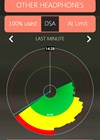
How loud is too loud? Smart ways to monitor noise exposure through your headphones
As an audiologist, an increasingly common concern patients have is noise exposure from their headphones and how it will impact their hearing over time. It’s a legitimate worry considering the average adult is streaming audio content on their mobile devices...How to identify and support adults with auditory processing disorder: a focus on low-gain devices and auditory training
Some adults struggle with hearing in noise despite normal audiograms. Tools like the HHIA, low-gain devices and auditory training can help identify and support these cases. In this article, Angela Alexander and Fatima Abbas use a case study to discuss...


