
You searched for "reinnervation"
New bone anchored hearing implant reaches clinical milestone
A new implant for bone-conduction hearing, BCI (Bone Conduction Implant), has been developed by Bo Håkansson and his team of researchers at Chalmers University of Technology and Sahlgrenska University Hospital, both in Gothenburg, Sweden. Unlike most bone-conduction devices used today,...Building partnerships for person-centred care
The Ida Institute are a renowned organisation that develops tools, materials and resources to help hearing care professionals integrate person-centred care into clinical practice. Lise Lotte Bundesen has been at the helm of this organisation since its inception; in this...Ida Institute scales down
The Ida Institute has been unable to secure future funding and is significantly scaling back its activities.National Acoustics Laboratories and Ear Science Institute Australia join forces
A partnership between two Australian organisations will bring together the country’s researchers to improve treatments for millions dealing with hearing issues.Top honour for audiologist
Laura Turton, Head of Audiology with NHS Tayside, has been recognised with a national award at Scotland’s Health Awards 2025.Ethics, conduct and sinonasal surgery
For the three plenary sessions at ERS 2023, we asked top leaders in the field to enlighten us in the general aspects of our profession that need attention. Prof Gil Siegal will discuss the ethical questions we encounter in our...On the influence of sex on tinnitus burden and its phenotypes
One important aspect of the new paradigm in tinnitus research is to question basic assumptions. What associations does the sex of a person have with their experience of and reaction to tinnitus? Chris Cederroth raises the question and tells us...Across the pond: a tale of two fellowships
Where in the world is Halifax? Many outside of Canada have never heard of the Maritime Canadian town of Halifax. Before leaving to start a year-long fellowship there, we both had to answer many questions from family and friends about...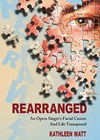
REARRANGED: An Opera Singer’s Facial Cancer And Life Transposed
Rearranged is a wonderfully positive memoir telling of Kathleen Watt’s ordeal through maxillary osteosarcoma. As an early career opera singer in the New York Metropolitan Opera’s chorus, her dreams are derailed and life transformed when this most rare diagnosis hits....
Which is the best graft for myringoplasty?
This is a systematic review and meta-analysis of retrospective studies for type 1 tympanoplasty (myringoplasty) surgery comparing temporalis fascia and cartilage autograft materials for reconstruction. Inclusion criteria was patients with more than 50% perforated tympanic membrane with intact ossicular chain....


