
You searched for "consulting"

Nothing about us without us: a how-to guide
Participatory design is an approach that is built around collaboration with users through a process of coproduction, design and creation. Most interventions are designed with the expert clinician researcher as the starting point, who looks at theory, evidence and their...The challenges in the risk stratification of thyroid nodules and cancers: the role of molecular testing
Around the world, molecular testing is becoming more widely used to personalise the management of thyroid nodules. Thyroid nodules are relatively common. They are palpable in ~5% of the population, while high-resolution ultrasound (US) incidentally finds them in 19–68% of...Simulation: human factors scenario training
It is said that surgical training has suffered as a result of a combination of factors – through the introduction of work time restrictions such as the European Working Time Directive (EWTD) [1], a limit on the number of years...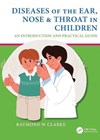
Diseases of the Ear, Nose & Throat in Children: An Introduction and Practical Guide
The name Professor Ray Clarke is well known and well regarded around the paediatric ENT world. With this helpful book, Prof Clarke creates the perfect knowledge base to make paediatric ENT more accessible to those working in general ENT and...Whale hearing tests through evoked potential audiometry
Covering over 70% of the earth’s surface and reaching known depths of 11km, the world’s oceans tick the box for an extreme environment. What do we know of the impact of environmental noise on the deep-sea dwellers of this habitat?...Diabetes and hearing loss: a review
As hearing health professionals we often ask, especially in older patients, if they have diabetes; but what is the link? How is it manifested and should it change current practice? Alec Lapira reviews the changing evidence. Early attempts to establish...In conversation with Dr Narveshwar Sinha
‘Only if you hear, you speak’ – early diagnosis of deafness On the occasion of World Hearing Day, Vikas Malik interviewed Narveshwar Sinha, Chairman of IDEAL Charity, a UK-based charity working for the hearing impaired in less developed countries for...
Static positional nystagmus
This study aimed to clarify the interpretation of positional nystagmus (PN) by looking at the current criteria for significance of PN, comparison of PN in symptomatic patients with normative data, prevalence of PN among participants with balance problems and assessing...
NSC- HHT – a systematic review of intranasal Bevacizumab
This systematic review of 13 studies concerning the use of an anti-angiogenic nasal treatment in the management of epistaxis in HHT patients finds no significant effect. This paper looked at four RCTs, three prospective studies, three retrospective, one case series...


