
You searched for "scar"
Monkey business
Professor Sir Donald Harrison (DFNH) had a strong interest in comparative anatomy of the larynx, which was supported by a close relationship with the London Zoo who provided specimens from any mammals in the collection that died and had undergone...
Surgeon, Heal Thyself
Once a taboo topic, stress and psychological illness in doctors is now much more widely discussed. This is probably partly due to changing societal attitudes (with more acceptance of the importance of acknowledging mental illness) and changes amongst medics themselves,...
An easy way to take intraoperative videos and pictures using a smart phone
Intraoperative visual documentation is a useful addition for personal archiving and for research purposes. Many commercially available systems are available for video and or photo documentations but these often require costly equipment. Smart phones would make ideal recording devices. However,...
Medical trends in sleep disordered breathing
This duo provide an eloquent outline of sleep disordered breathing in general, with particular emphasis on the medical impact and associations of the condition. The increasing prevalence of the condition is described, with increasing worldwide obesity, increased association of cardiac...
What do SLTs do in palliative care?
The authors of this article highlight that the number of older people has increased significantly in the last two decades, and the number of people over 85 has doubled in Australia since 1996. They attribute this to improved lifestyle factors...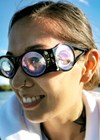
Boarding Glasses: could these unique spectacles be the answer to alleviating motion sickness?
Laurel Palmer is a Toronto-based Audiologist who also suffers from motion sickness. For Tech Reviews, she is testing out Boarding Glasses by Boarding Ring, on the road and at sea, to see if they can give her some relief. Motion...Surgical challenges in advanced or recurrent thyroid malignancy
The management of thyroid malignancy and extent of surgery is controversial, especially considering the limitations of preoperative diagnosis. Neil Tolley provides guidance and reminds us of our responsibility not to over-treat. In the UK, 16% of thyroidectomies are performed for...
Rhinology and 3D printing
3D printing has increasing applications in rhinology, for instance to create patient-specific preoperative models for procedure planning, including designing a template for reconstruction planning following tumour resection, patient consultation and customised prostheses. The authors focused their review on the role...
Removing nasal polyps assists with sleep
This small Scandinavian study looked at sleep quality in patients with CRS and nasal polyposis and whether this is improved by surgery, rated by questionnaires. A cohort of 42 Swedish patients in 2013-14 filled out four different validated sleep and...
Salt in surgical simulation
Cheap, easily accessible and realistic methods of reproducing surgery through simulation are the ideal. Here a group from Tokyo, Japan report on a method of producing 3D printed skulls and mandibles to use for simulated surgery. A high resolution CT...
A novel use for coblation in the nose
Having recently become a coblation convert for multiple applications in ENT (including tonsillectomy, inferior turbinate reduction and radiofrequency ablation of the tongue base), it was interesting to read about another novel use in the nose. This preliminary report evaluates the...


