
You searched for "medication"
Soluvos Medical is a corporate sponsor of the ELS
Everyone had hoped to see each other in person at the postponed 2020 ELS in Berlin. Instead, everyone will meet at the: Virtual European Laryngological Society meeting on 28th May 2021Soluvos Medical wishes readers a great year end!
As the end of 2021 approaches, everyone is hoping that life can get back to a more socially active world.Soluvos Medical – official partner for COOK OHNS in BeNeLux
Soluvos Medical is proud to be an official partner for COOK OHNS in the BeNeLux region, as of 1 February 2022, for the COOK OHNS product line: Sialendoscopy, Biodesign Otologic repair, Doppler Blood Flow Monitor, Biodesign Dural repair.Soluvos Medical is looking forward to the congress season 2022
The Soluvos team is preparing for the summer break. In the meantime, they can be found at the following eventsSoluvos Medical is looking forward catching up after the summer break
The Soluvos team is preparing for the post-summer meetings and hoping that you will all be keyed up and looking forward to participating again.
When to operate on a patient without chronic disease?
As ENT surgeons, we spend a lot of time managing chronic rhinosinusitis, so a review and update on the management of the acute disease is always helpful. The standard medical treatment of antibiotics, nasal steroids and nasal decongestants are reported...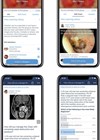
MedShr-ing is caring
MedShr is an international, award-winning medical education platform that has been created for healthcare professionals (HCPs) to discuss, learn, teach, and (to a lesser degree) network with one another. MedShr was founded in 2014 by Cardiologist Dr Asif Qasim and,...Assessment of genetic disorders: congenital sensorineural hearing loss
Severe or profound sensorineural hearing impairment (SNHI) is a common birth defect, affecting approximately 1 in 1000 newborns [1]. SNHI may result from environmental causes or have a genetic basis. The genetic causes can be further subdivided into non-syndromic (isolated...Non-surgical rhinoplasty
Some patients would like to alter the appearance of their nose without surgery or make further subtle changes after a rhinoplasty. Lydia Badia explains how this can be done, thanks to the advent of injectable fillers. This medical procedure in...WENTS - Mentoring skills training workshop November 2020
WENTS, in affiliation with ENT UK, aims to inspire and support women training and working in ENT (www.entuk.org/wents).
Use of technological aids and interpretation services
Hearing loss attracts large interest among researchers all over the world due to its prevalence and negative psychological side-effects. Usually hearing loss is managed with hearing aids. However, there are several additional technologies that can be of great help for...


